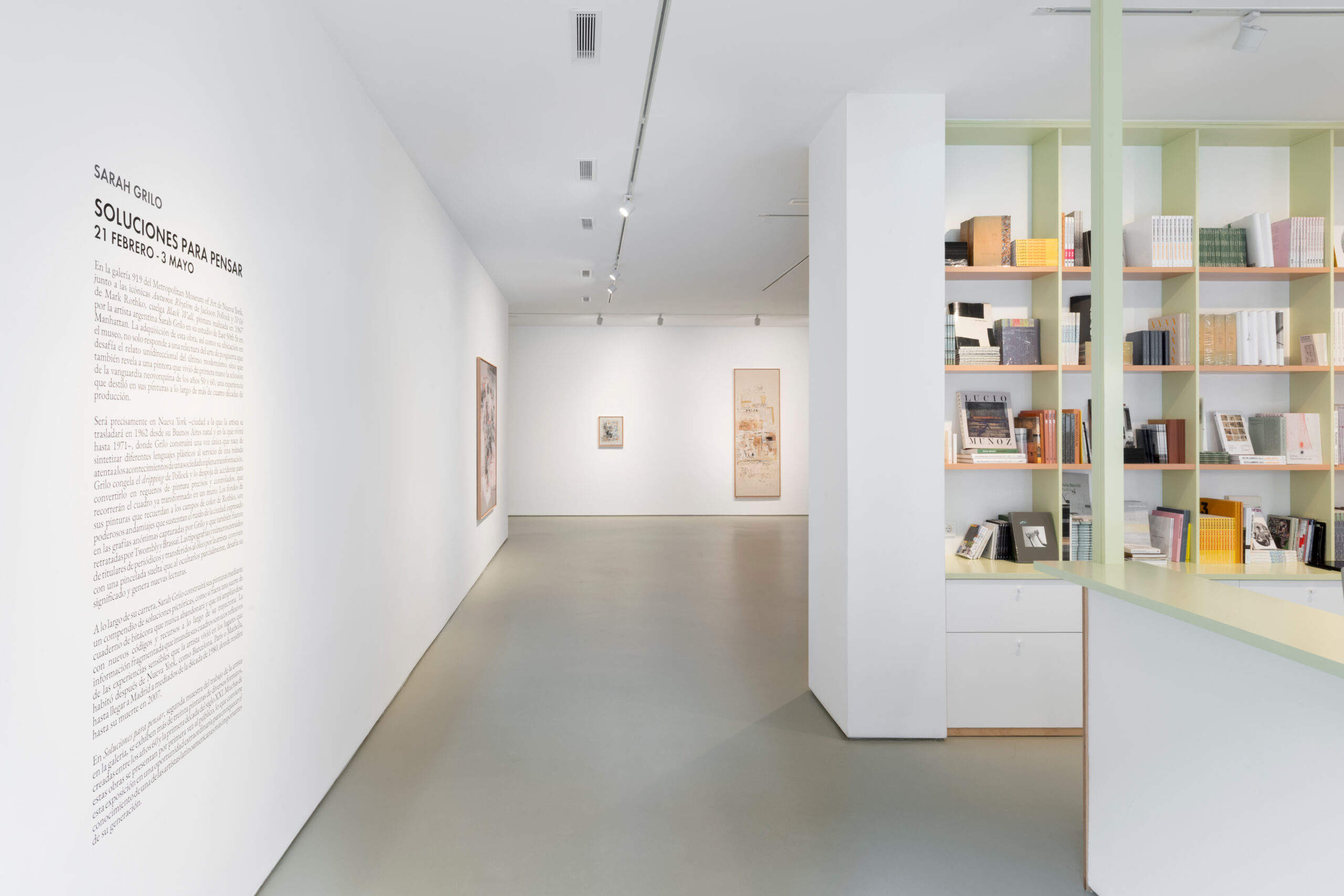
At Gallery 919 of The Metropolitan Museum of Art in New York, alongside Jackson Pollock’s iconic Autumn Rhythm and Mark Rothko’s No. 16, hangs Black Wall, a painting created in 1967 by Argentine artist Sarah Grilo in her East 50th St. studio in Manhattan. The acquisition of this work, as well as its placement in the museum, not only reflects a reexamination of postwar art that challenges the linear narrative of late modernism, but also highlights a painter who experienced firsthand the rise of the New York avant-garde in the 1950s and 1960s—an experience she distilled into her paintings over more than four decades.
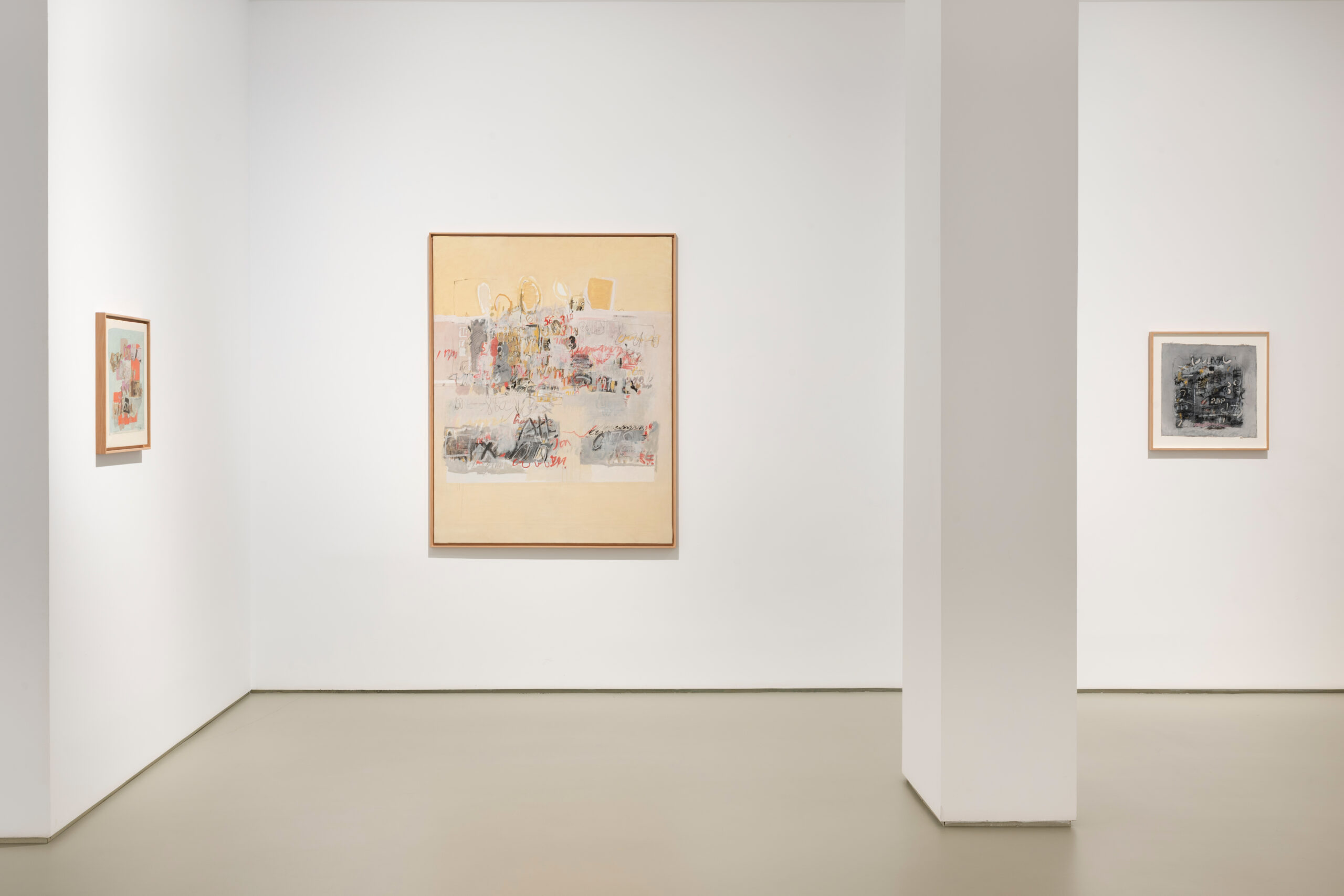
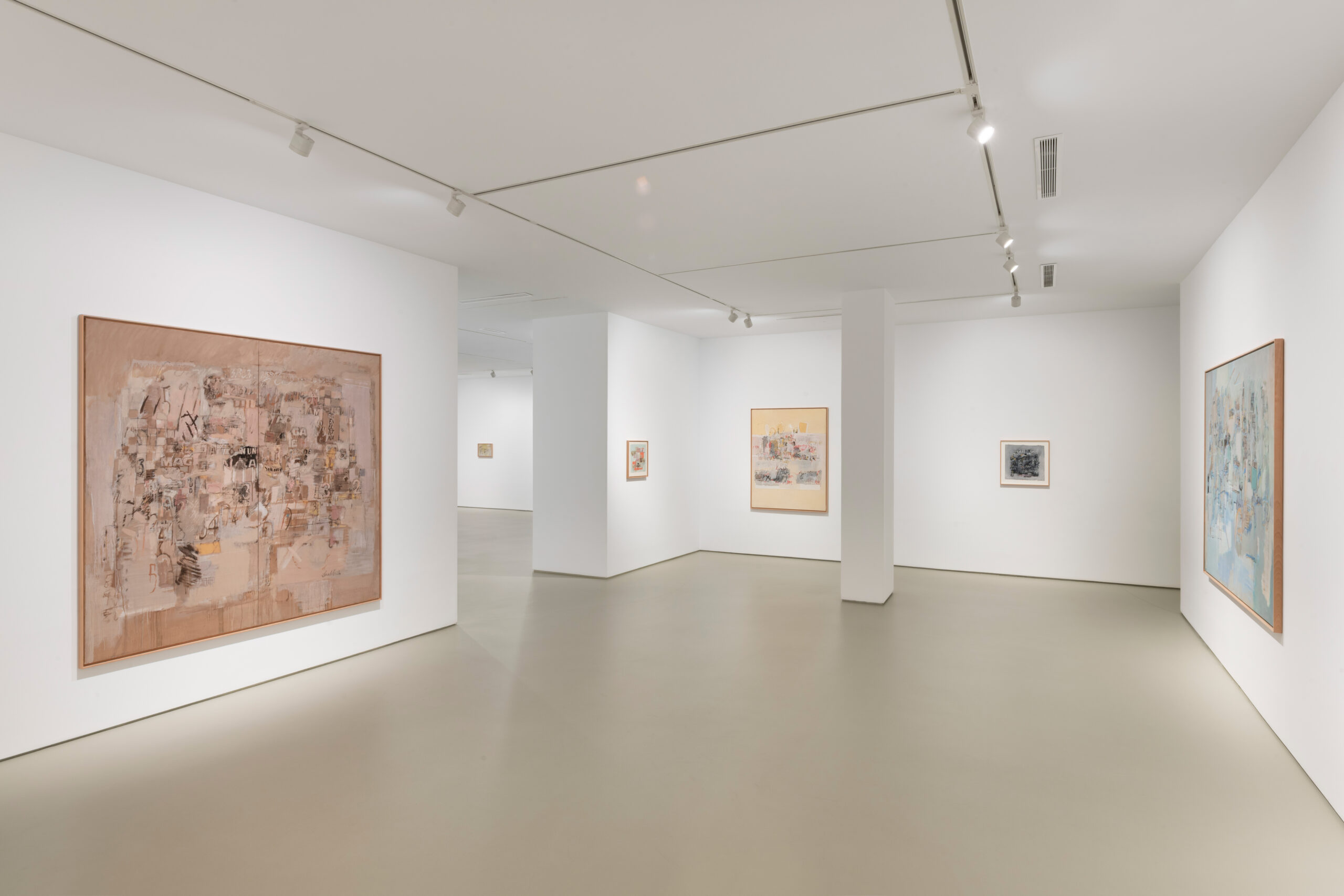
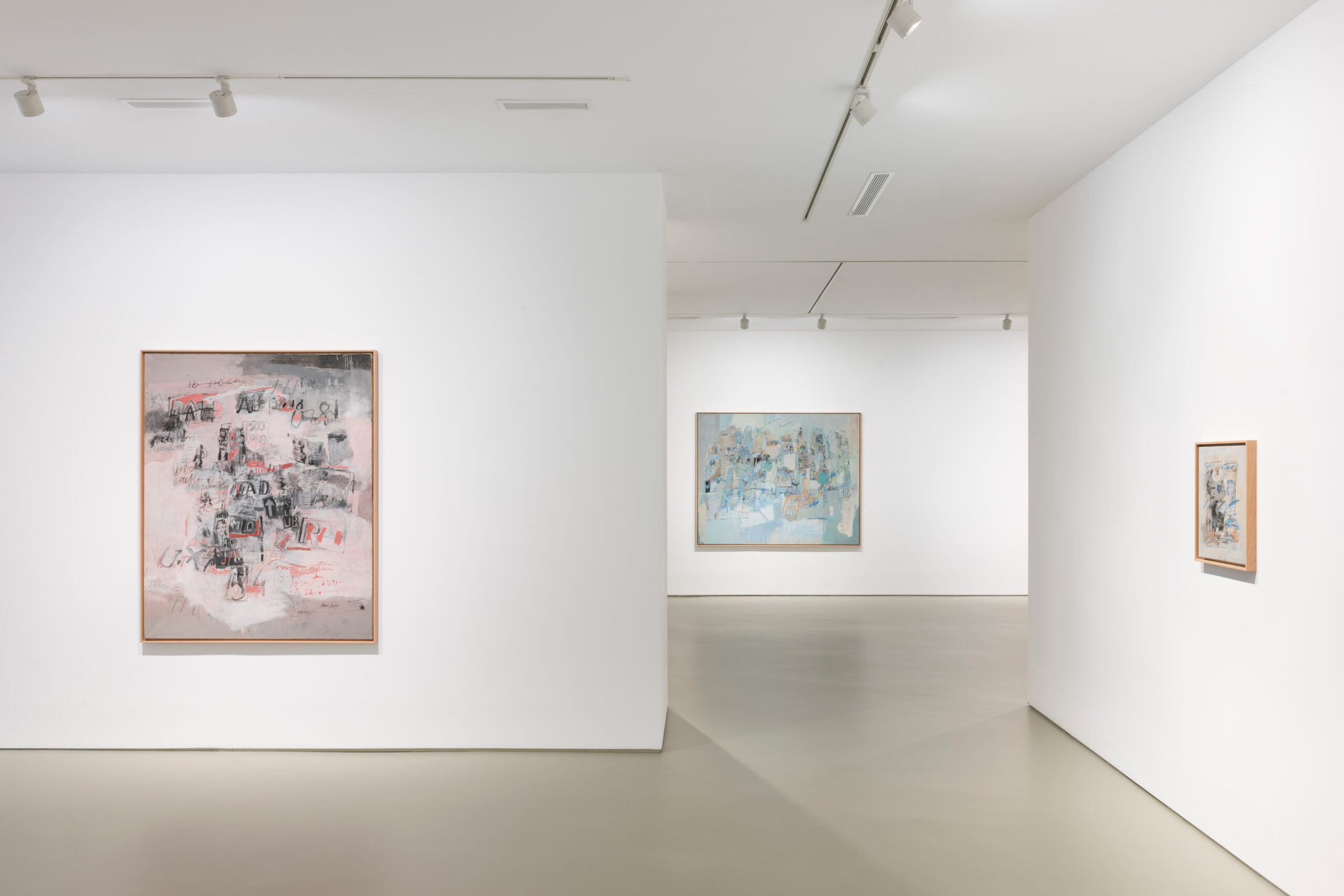
It was in New York—the city the artist moved to in 1962 from her native Buenos Aires and where she lived until 1971—that Grilo developed a unique voice, synthesizing different visual languages to capture a society in the midst of transformation. She freezes Pollock’s dripping technique, stripping it of its spontaneity and transforming it into precise, controlled streams of paint that run across the canvas, turning it into a wall. The backgrounds of her paintings, reminiscent of Rothko’s color fields, serve as powerful scaffolding that supports the urban noise, expressed through the anonymous graffiti she captured—echoing the works of Twombly and Brassaï. The typography and numbers, extracted from newspaper headlines and transferred to oil paint by the artist, coexist with loose brushstrokes that partially obscure them, challenging their meaning and generating new interpretations.
Throughout her career, Sarah Grilo built her paintings through a repertoire of pictorial solutions, as if creating an ongoing visual journal—one she never abandoned but continuously expanded with new codes and resources. The fragmented information that floods her canvases is a reflective echo of the sensory experiences she lived in the places she inhabited after New York, including Barcelona, Paris and Marbella, before settling in Madrid in the mid-1980s, where she lived until her passing in 2007.
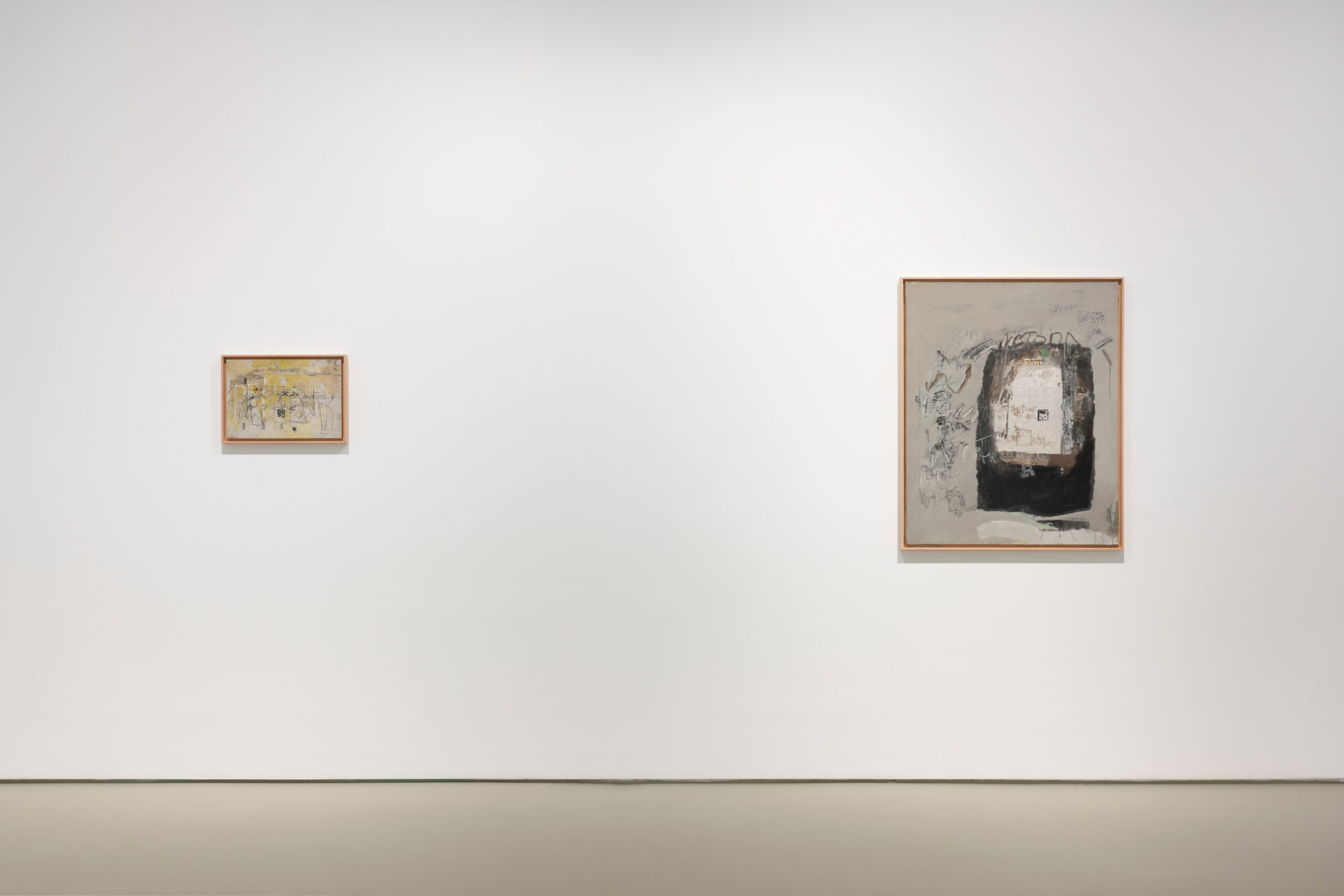
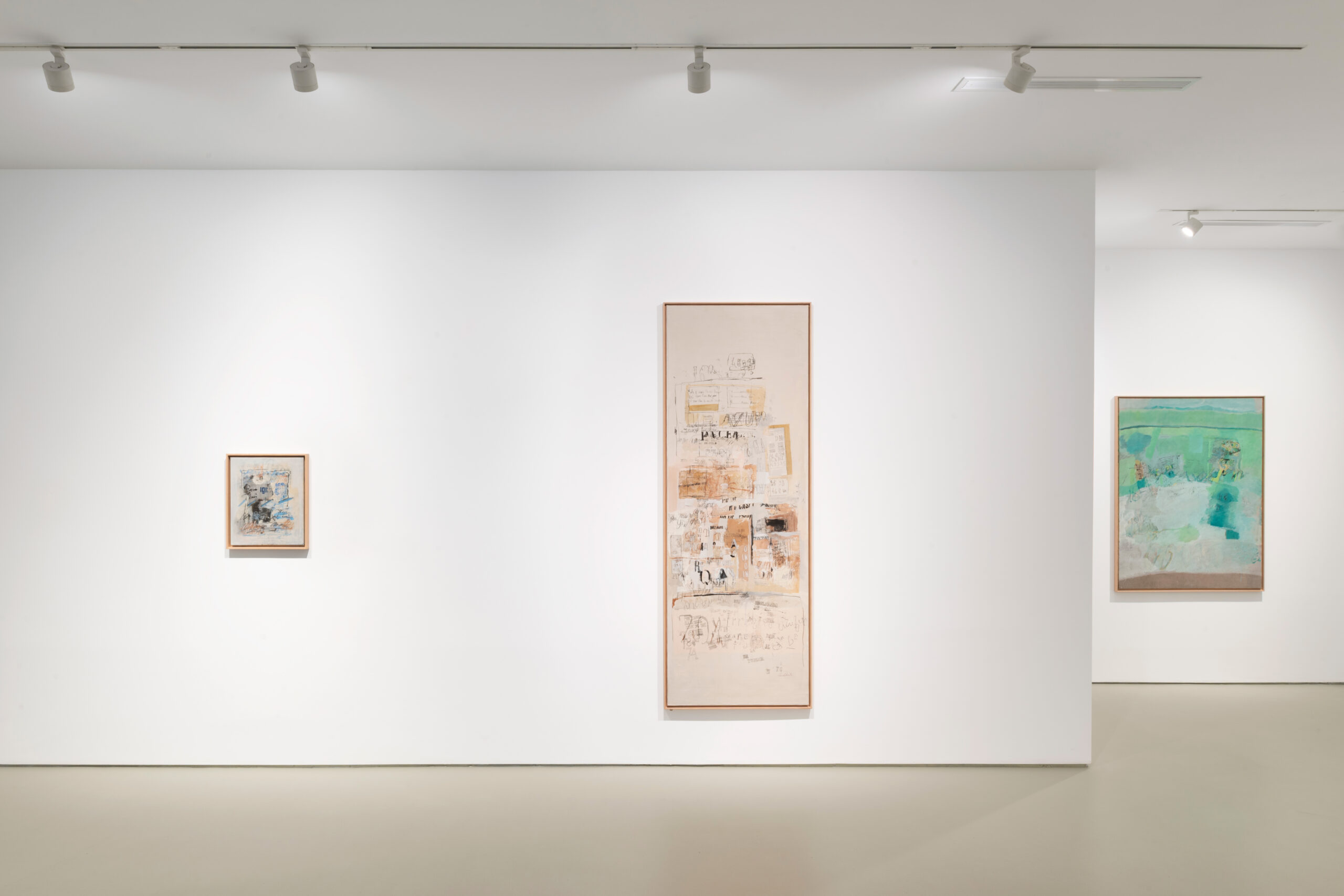
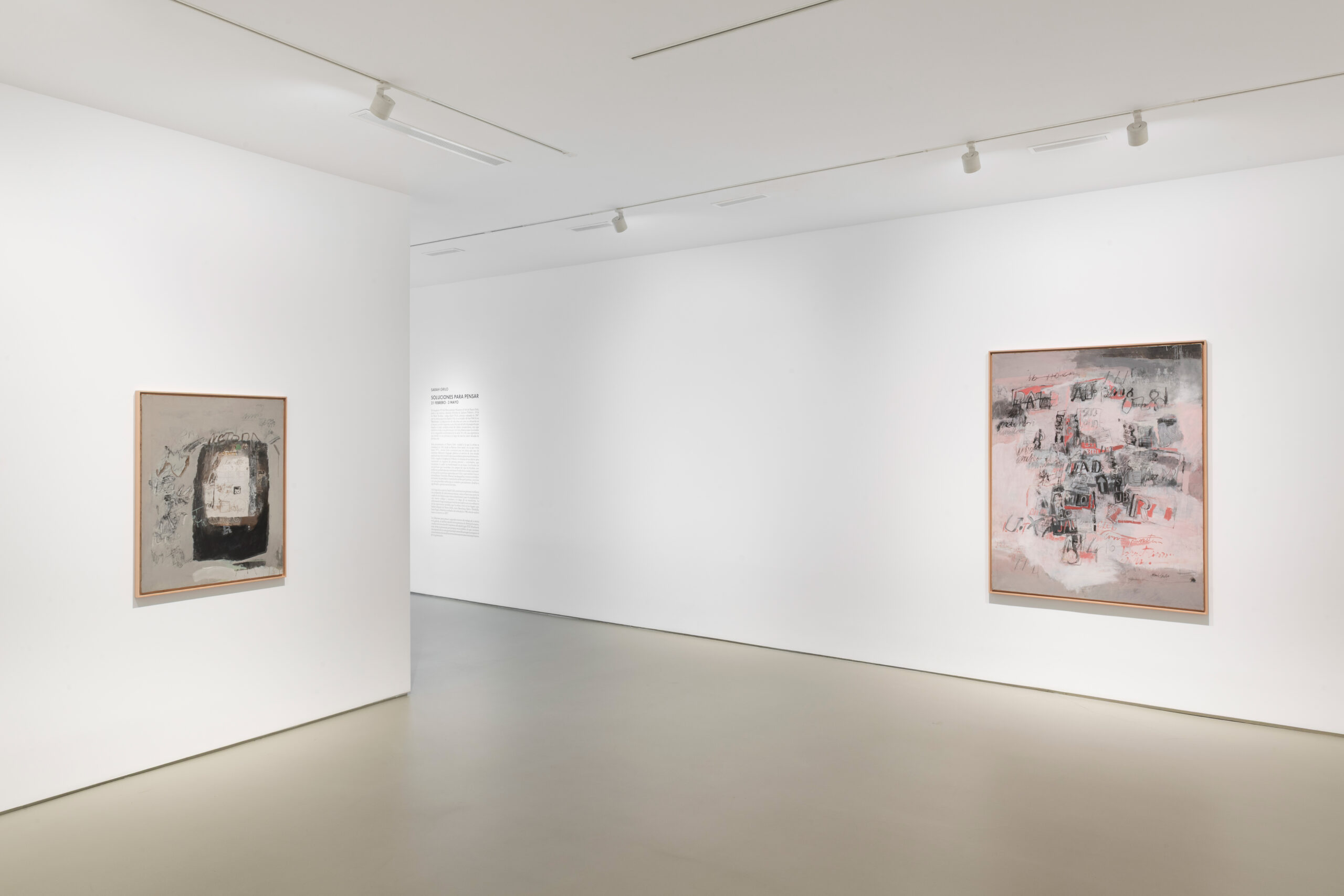
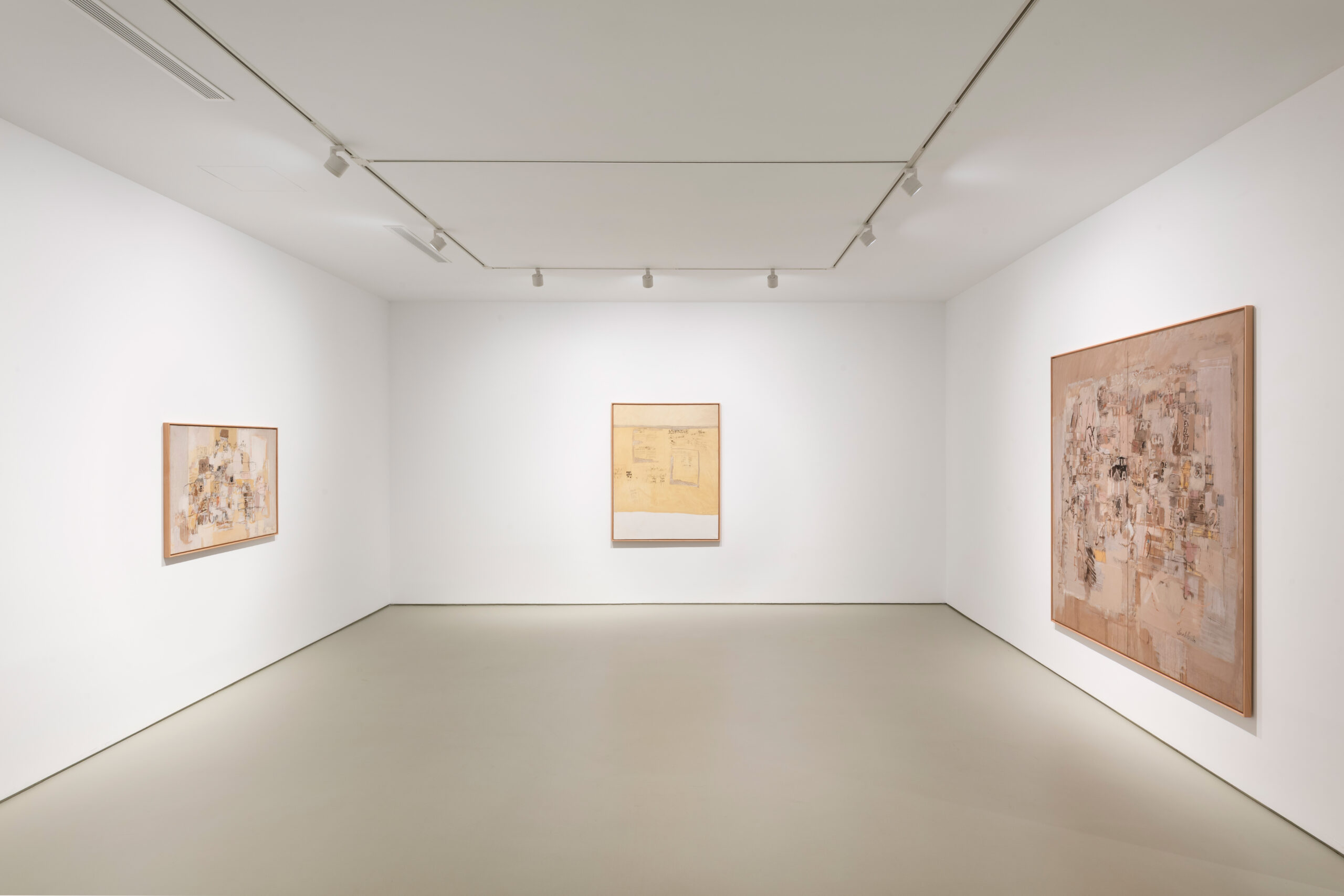
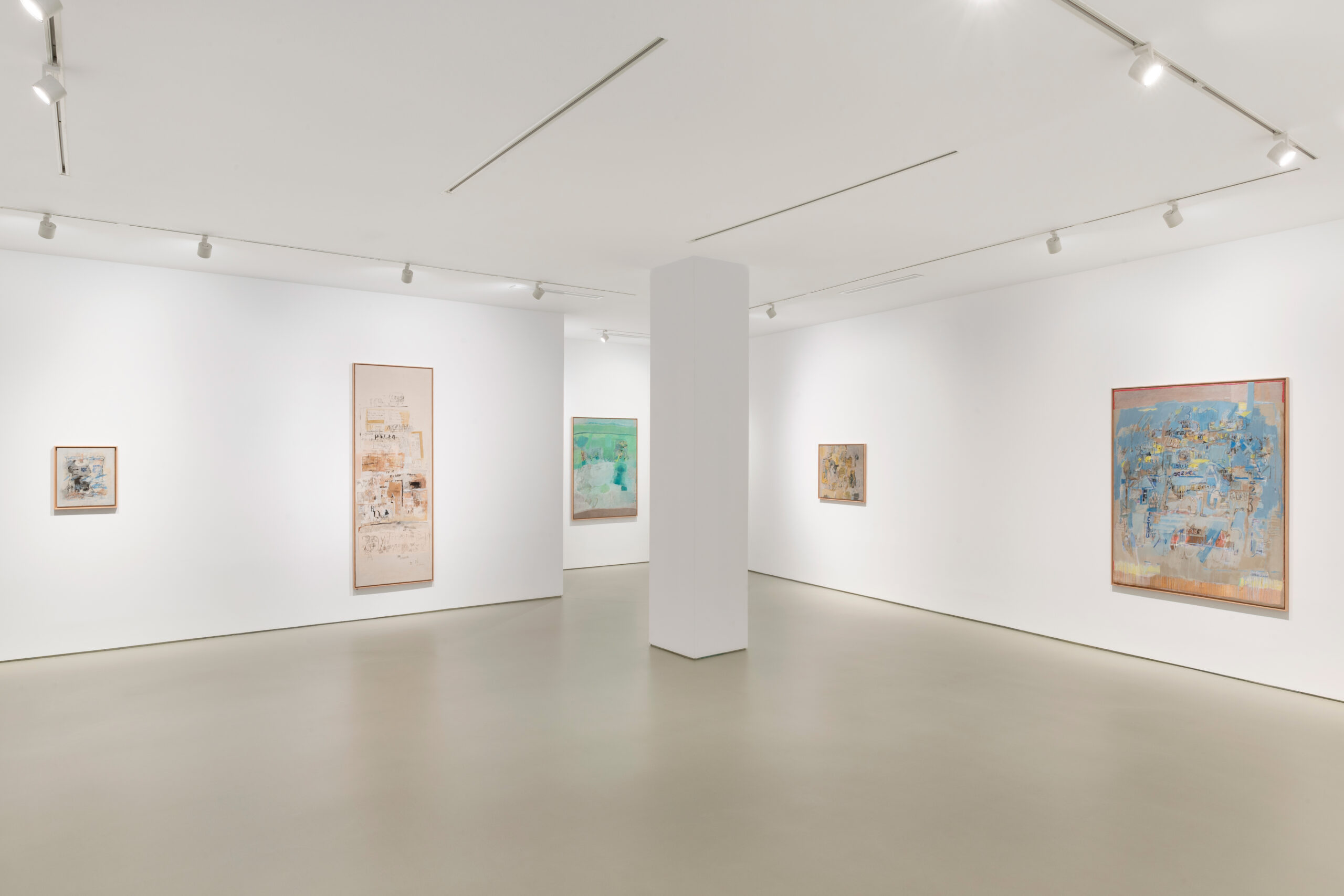
In Soluciones para pensar, the second exhibition of the artist at the gallery, over thirty paintings of various formats, created between the 1960s and the early 1990s, are on display. Many of these works are being presented to the public for the first time, making this exhibition a rare opportunity to deepen the understanding of one of the most significant Latin American artists of her generation.
Sarah Grilo (Buenos Aires, 1917 – Madrid, 2007) participated in the Venice Biennale (1956) and the São Paulo Biennale (1953, 1961) and was awarded the prestigious Guggenheim Fellowship in 1962. Her work is part of the collections of major institutions, including The Metropolitan Museum of Art (New York); MoMA (New York); Museo Nacional Centro de Arte Reina Sofía (Madrid); Nelson Rockefeller Collection (New York); Museo Nacional de Bellas Artes de Buenos Aires (Argentina); Stedelijk Museum (Amsterdam); Dallas Museum of Art (USA); Estrellita B. Brodsky Collection (New York); Museo de Arte de Cartagena (Colombia); Museo de Bellas Artes de Caracas (Venezuela); Instituto de Arte Contemporáneo de Lima (Peru); Museo de Arte Contemporáneo de Lima (Peru); and Banco Santander Collection (Madrid). Her work has also been acquired by Spain’s National Heritage.
Sarah Grilo’s work has been exhibited both individually and collectively at institutions such as MoMA, New York (2023); Whitechapel Gallery, London (2023); The Solomon R. Guggenheim Museum, New York (1964); Museo Nacional Centro de Arte Reina Sofía (Madrid); Art Institute of Chicago (USA, 1959); Vincent van Gogh Foundation, Arles, France (2023); San Francisco Museum of Modern Art (1978); Museo de Arte Contemporáneo Latinoamericano, La Plata, Argentina (2020) or Grand Palais, Paris (1988).