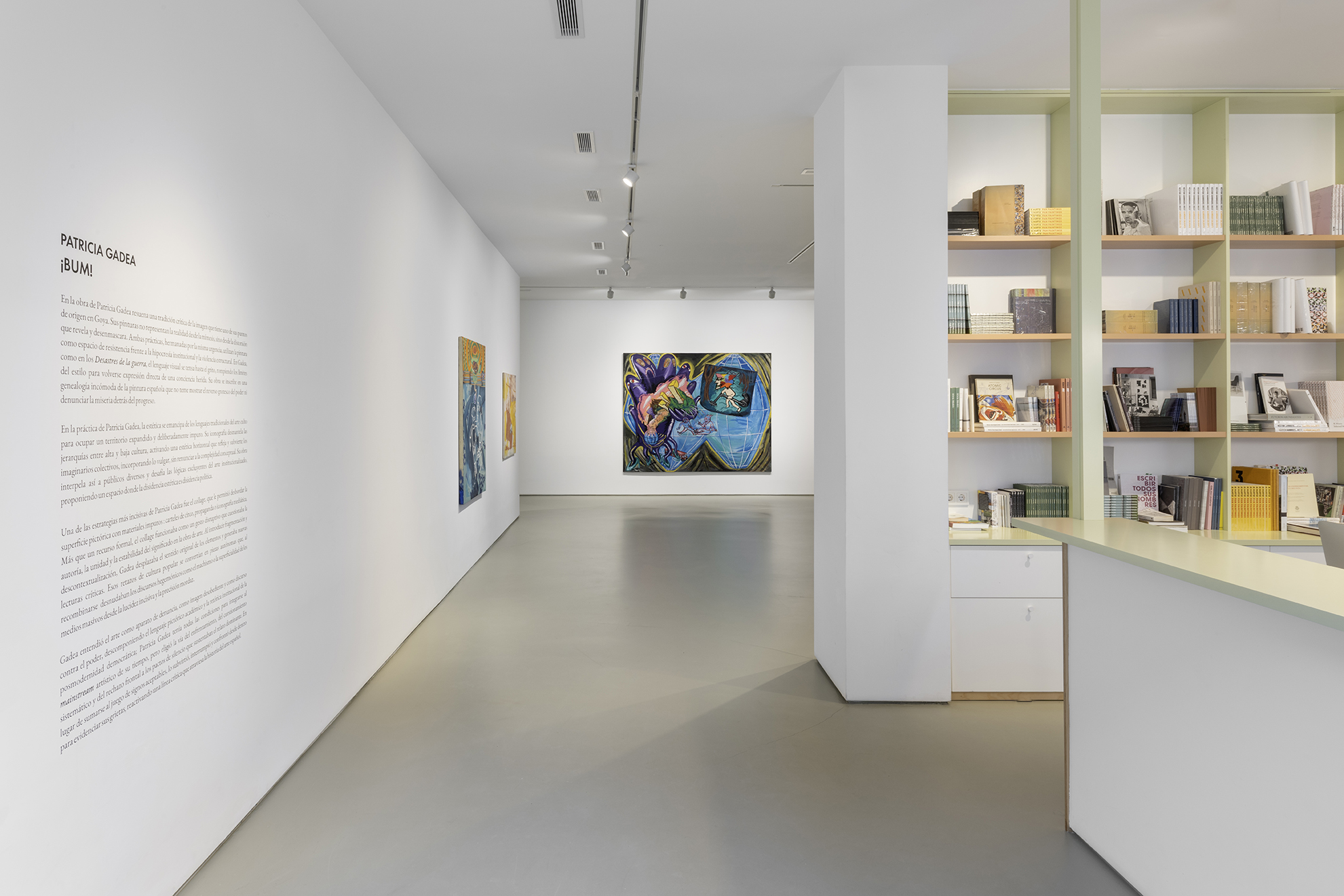
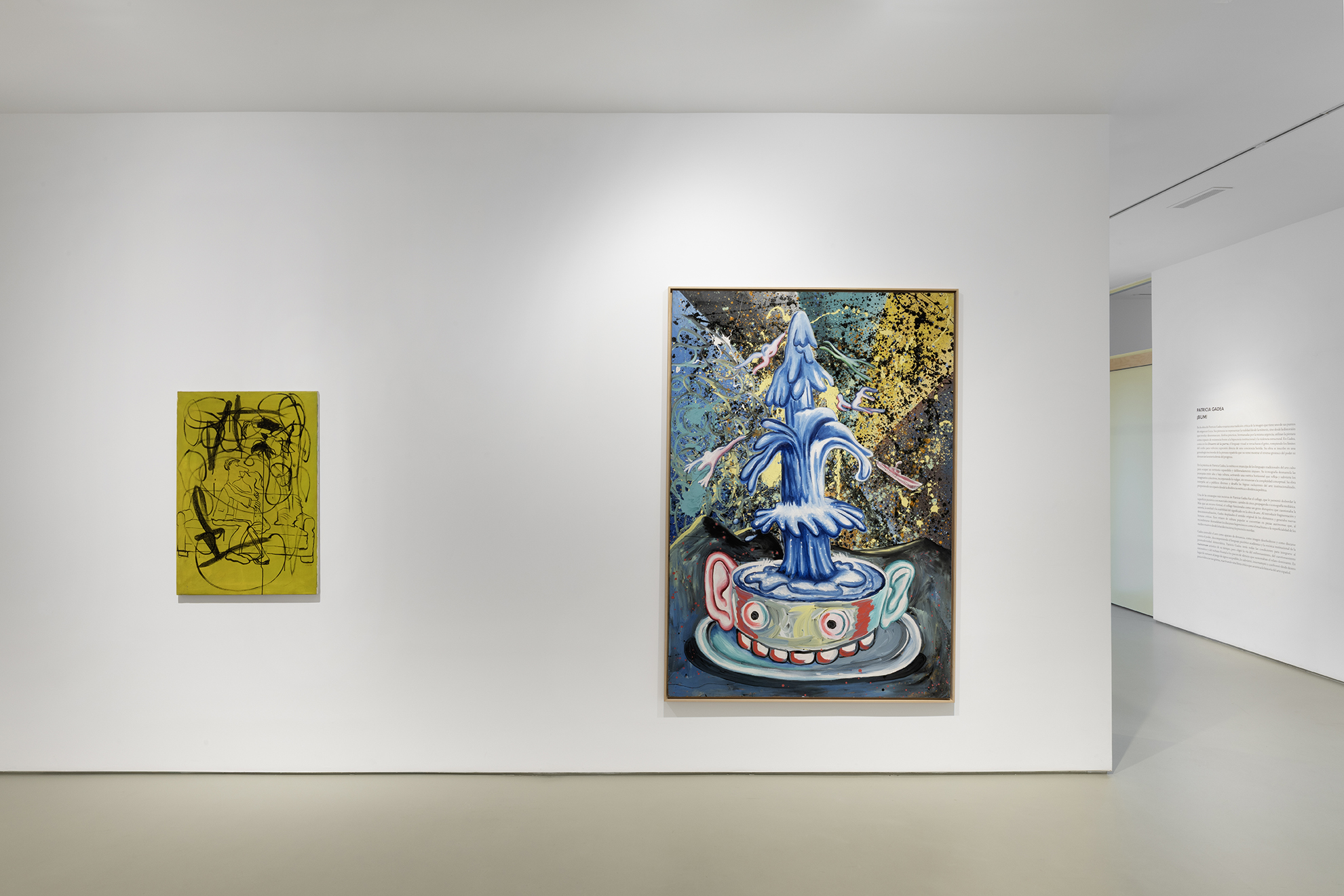
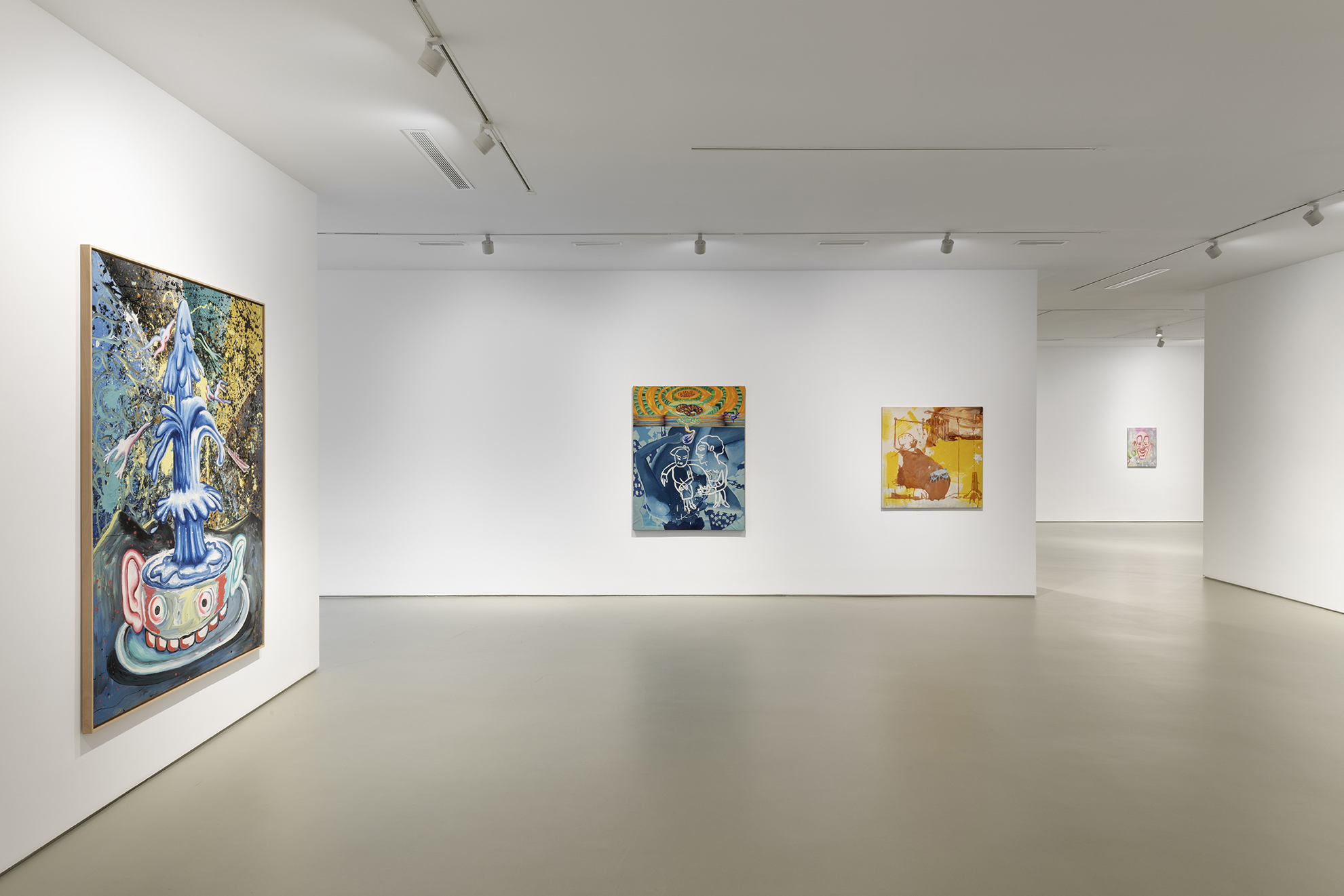
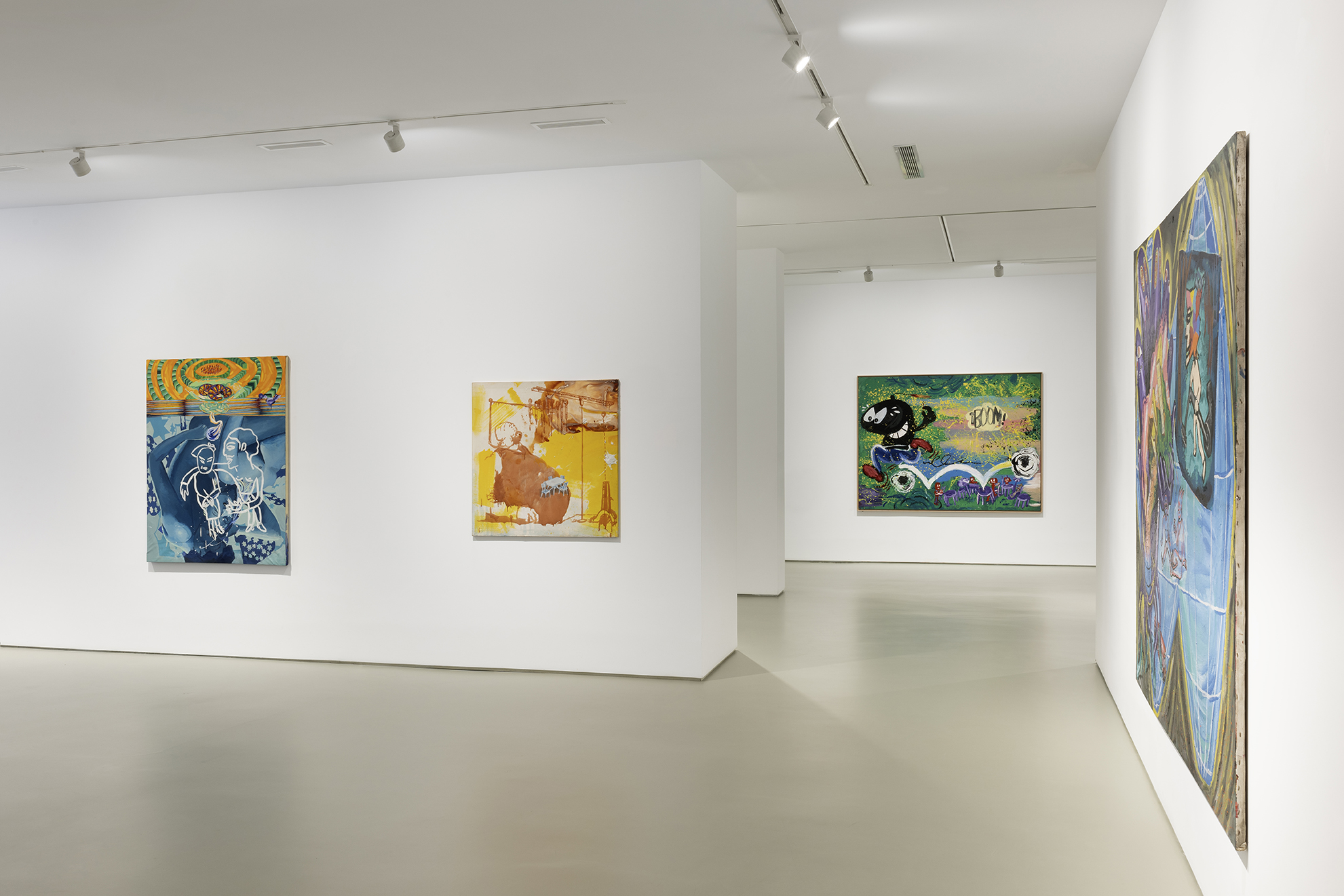
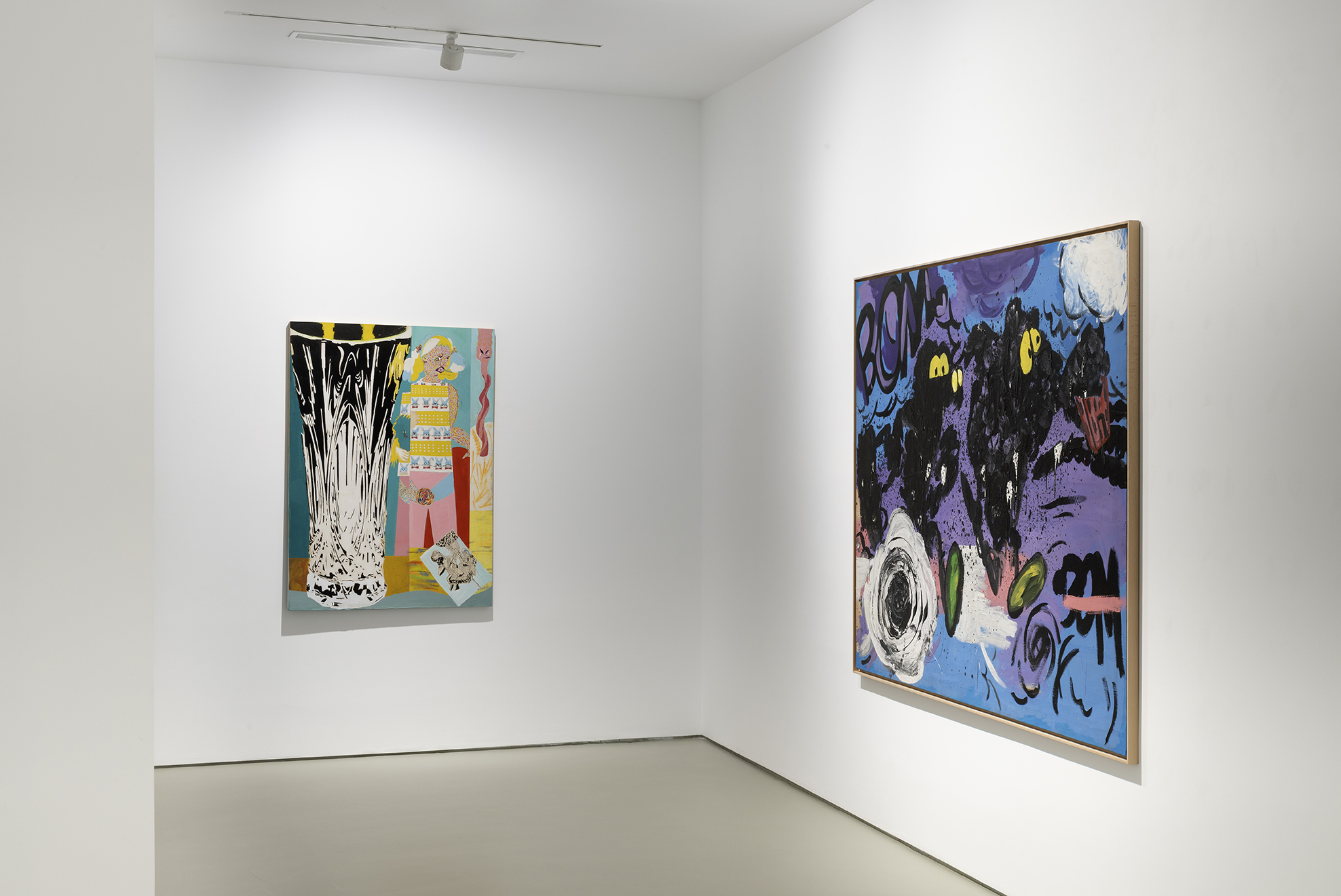
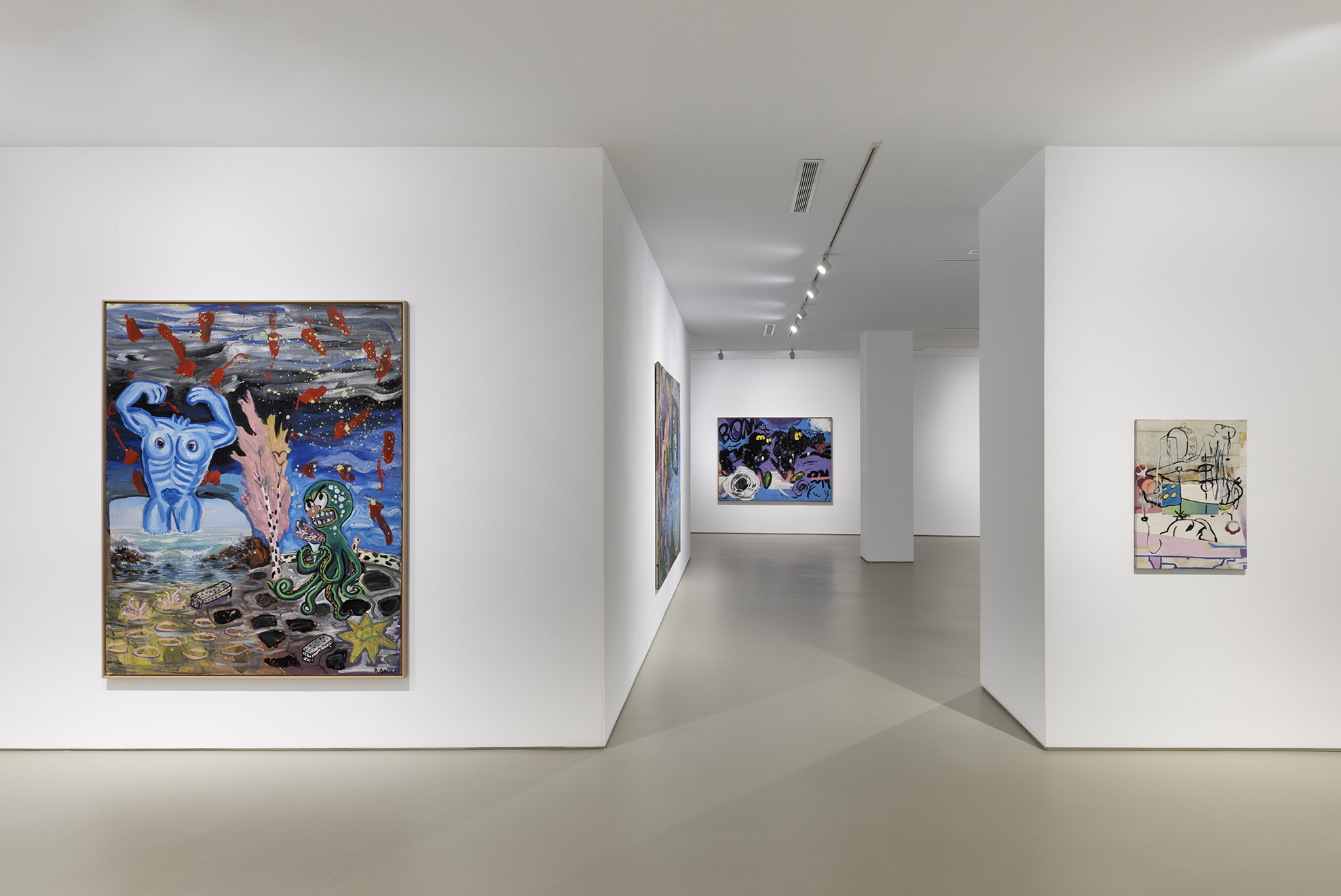
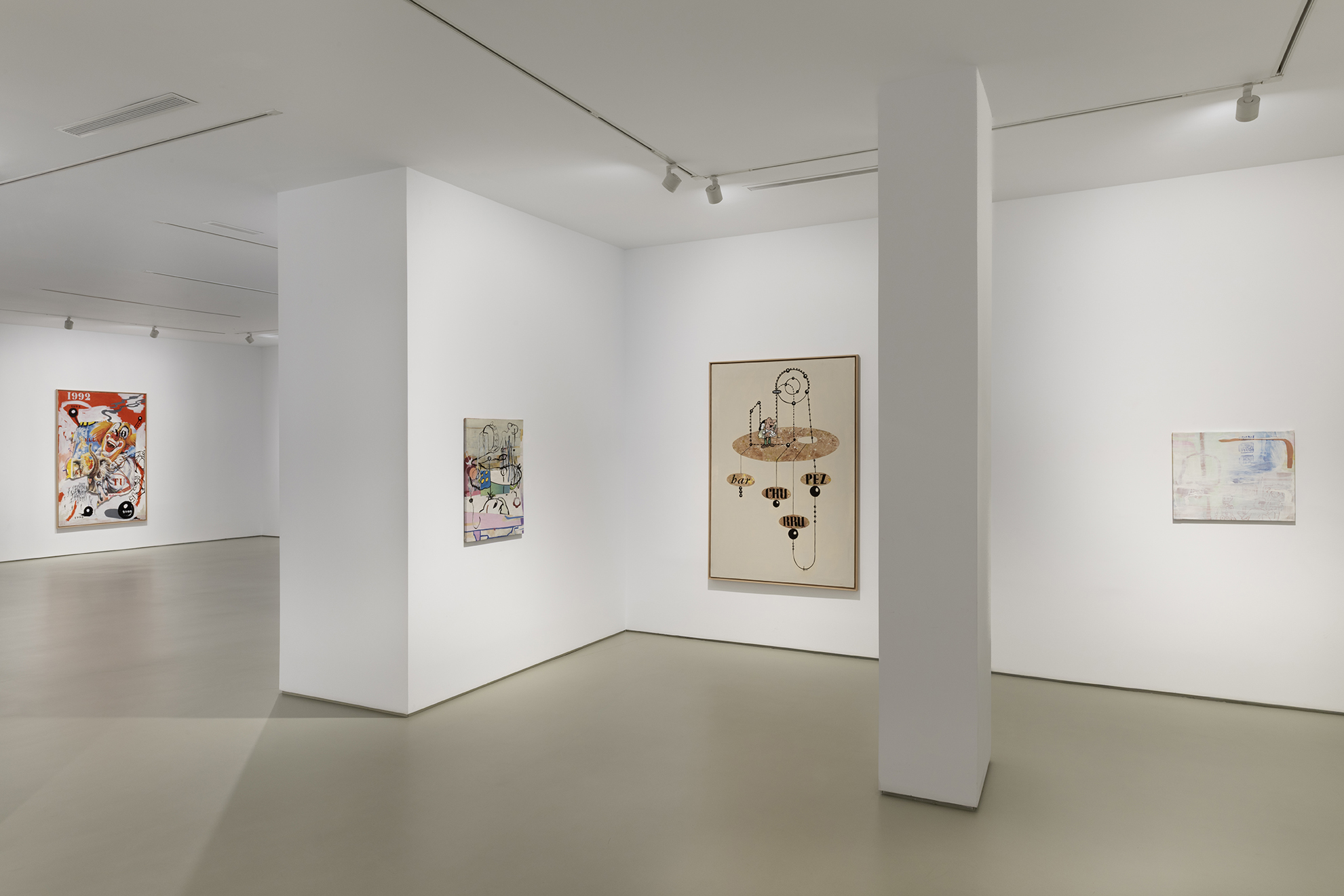
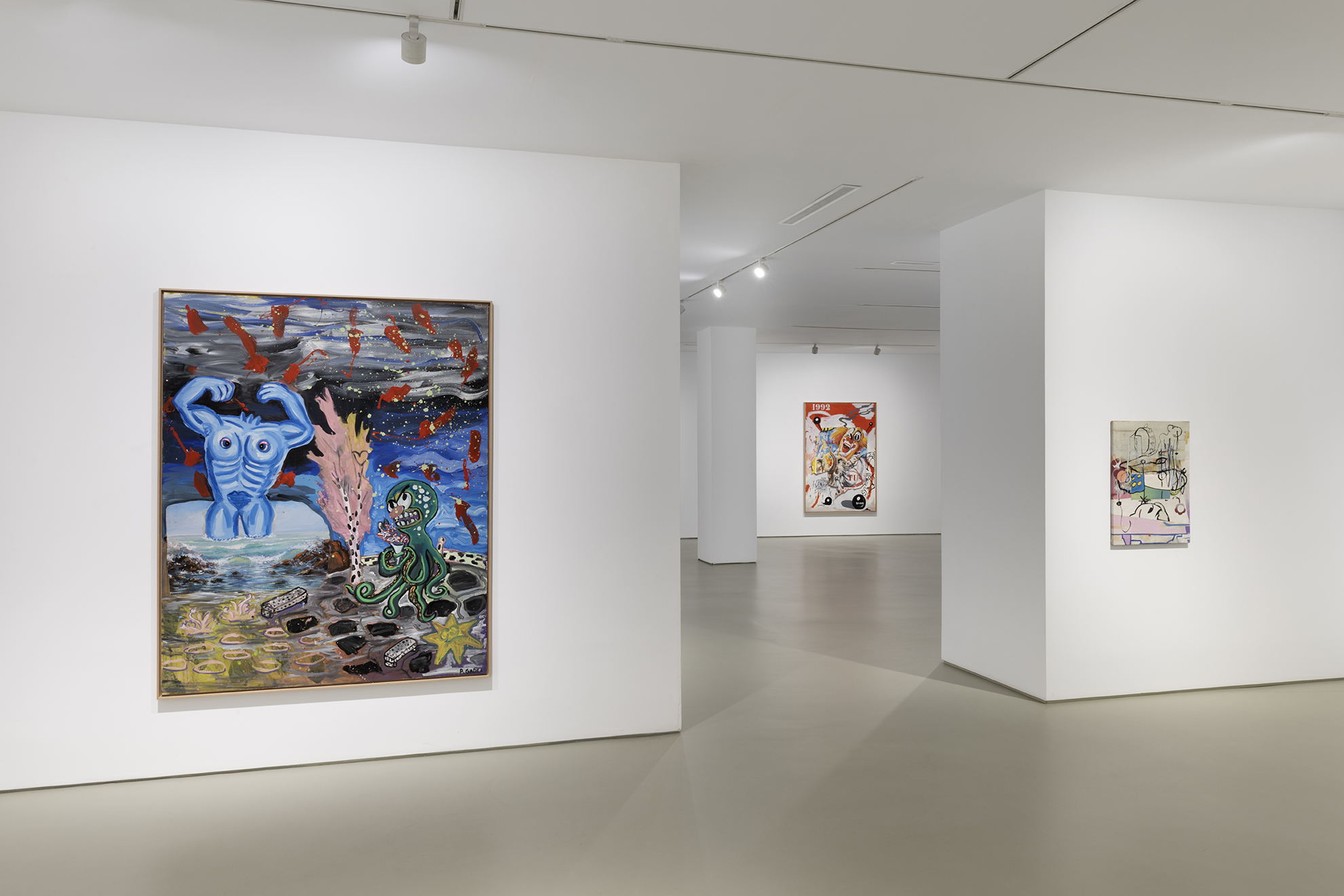
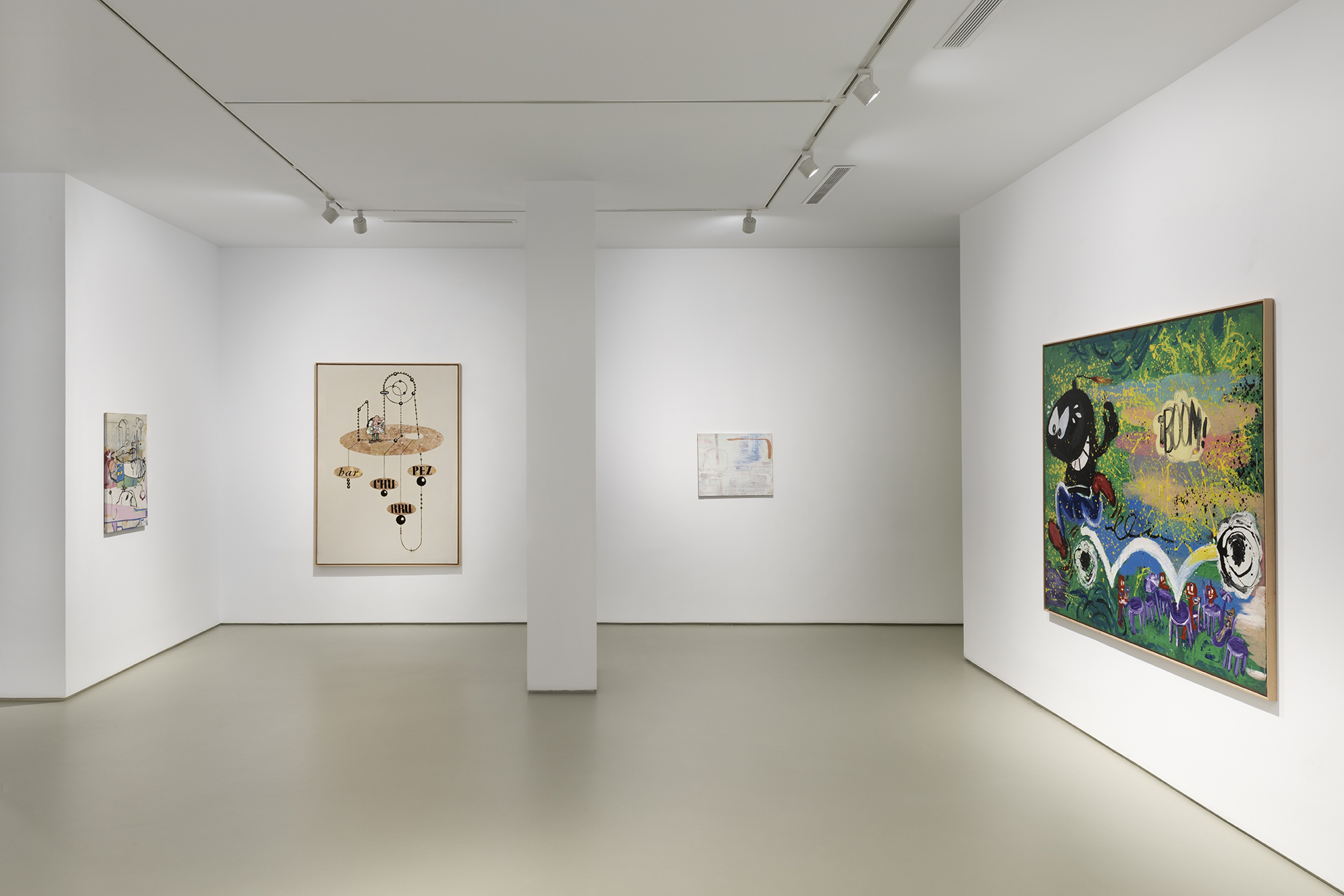
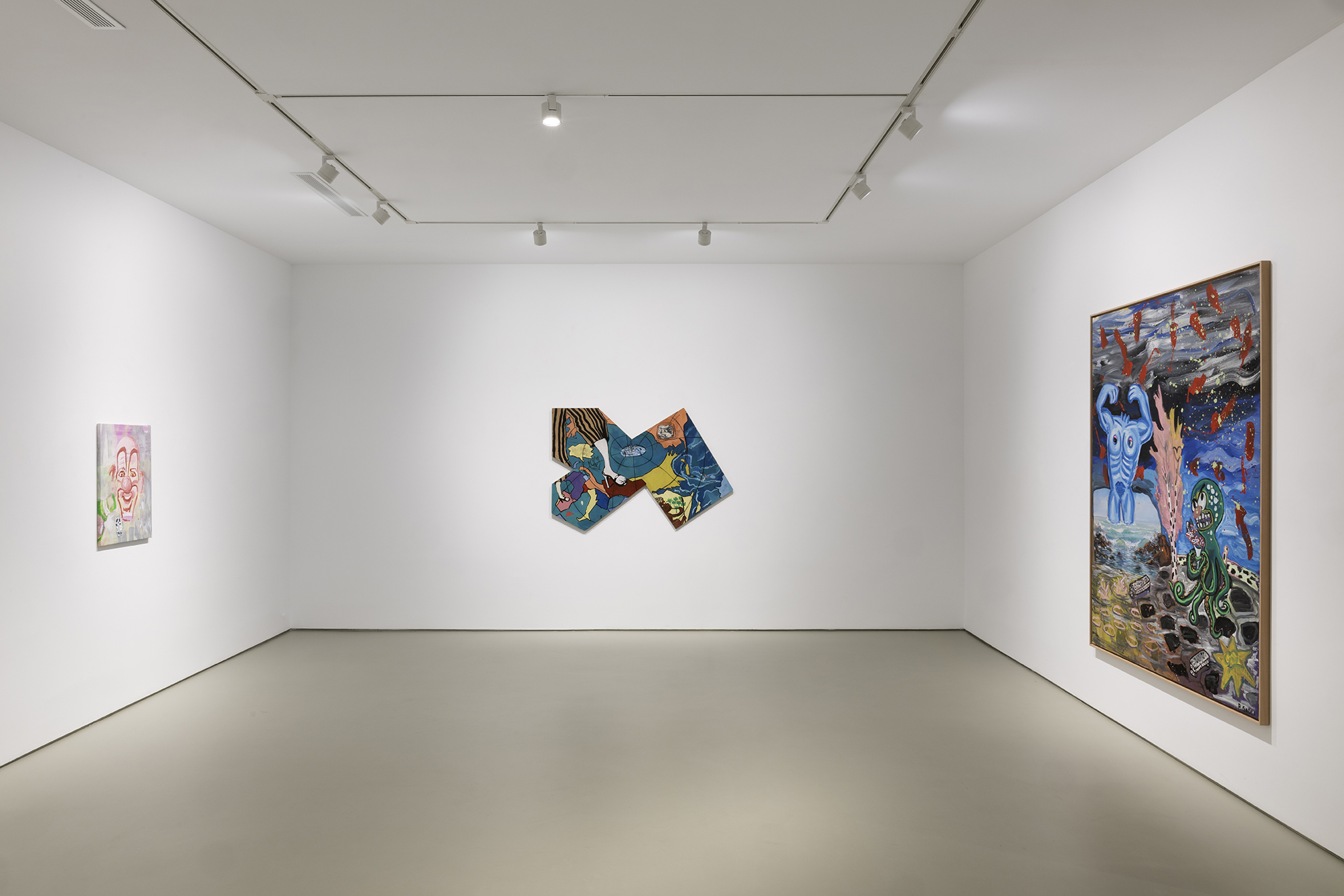
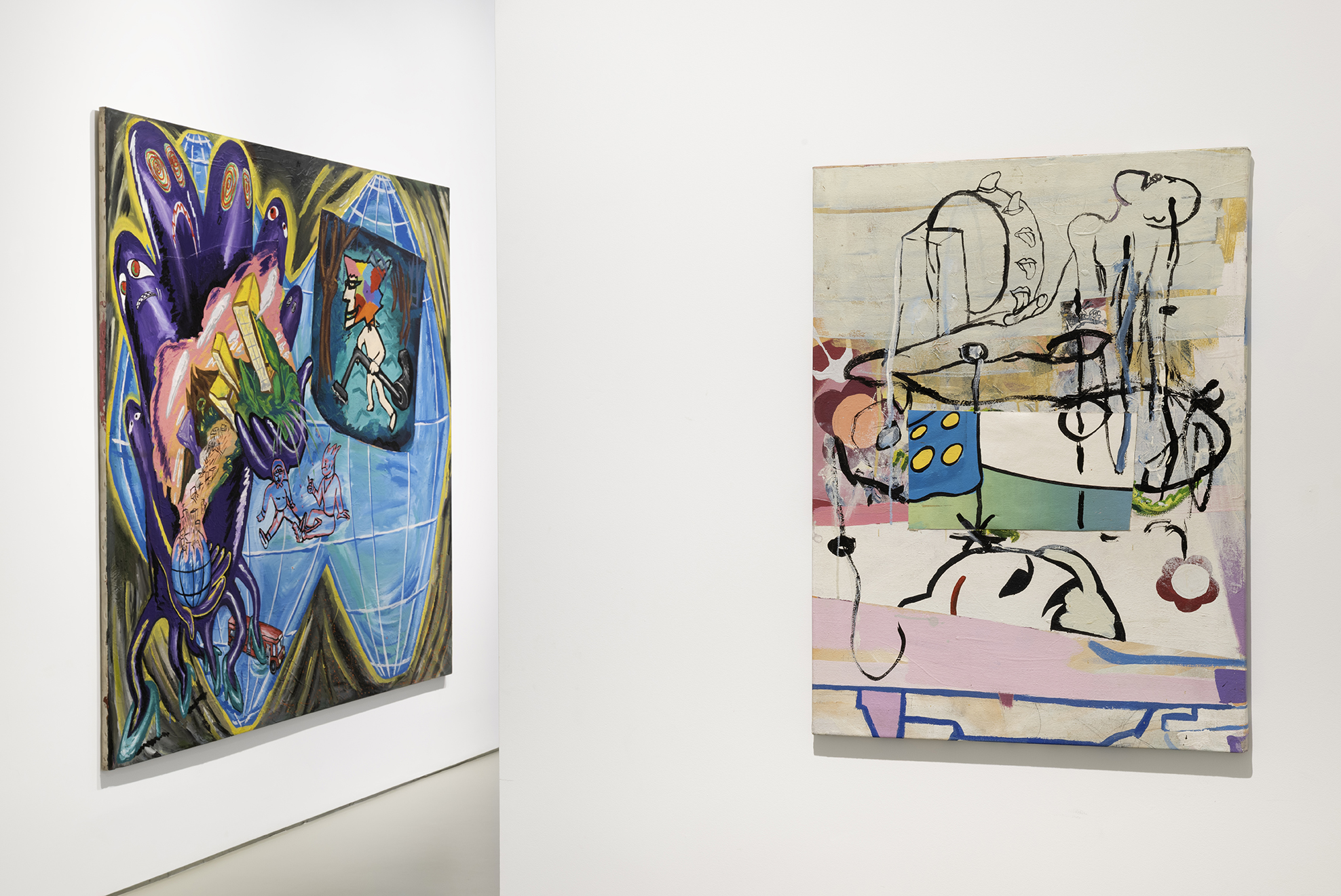
Patricia Gadea ’ s work echoes a critical tradition of imagery that has one of its origins in Goya. Her paintings do not represent reality through mimesis, but rather through distortion that reveals and unmasks. Both practices, united by the same urgency, use painting as a space of resistance against institutional hypocrisy and structural violence. In Gadea, as in Goya ’ s Disasters of War, visual language is stretched to the point of scream, overflowing the limits of style to become a direct expression of a wounded conscience. Her work is part of an uncomfortable genealogy of Spanish painting that is not afraid to show the grotesque underside of power or to denounce the misery behind progress.
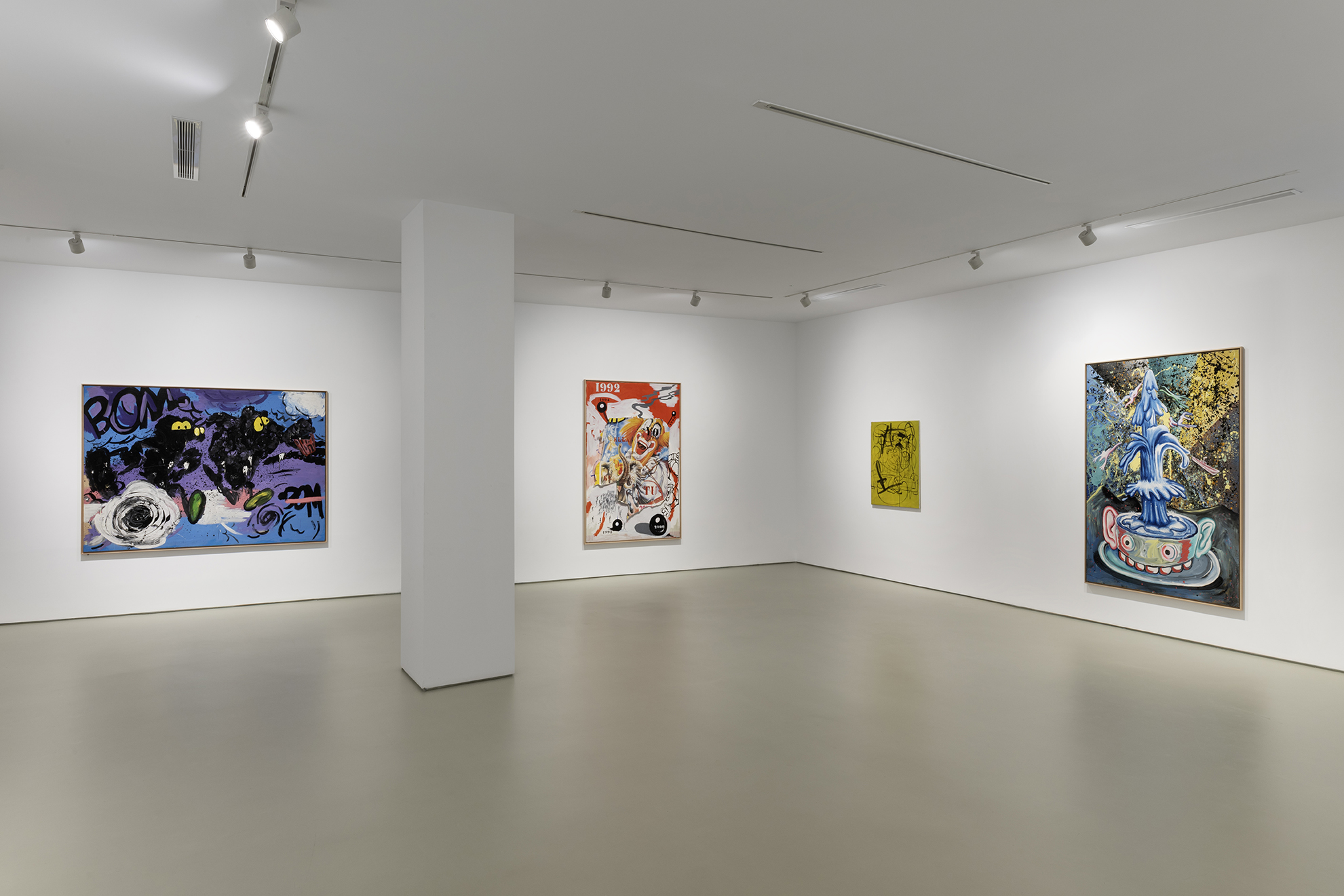
In Patricia Gadea ’ s practice, aesthetics emancipates itself from the traditional languages of high art to occupy an expanded and deliberately impure territory. Her iconography, riddled with comic book characters, school graphics, advertising clippings, and ideological slogans, dismantles the hierarchies between high and low culture, activating a democratic aesthetic that reflects, but also subverts, the collective imaginaries of her time. Far from being a naïve or populist gesture, this incorporation of the everyday, the vulgar, and the childish responds to a critical stance: Gadea transfers the tensions of the Spanish political and social context to the artistic plane, making them visible through accessible and direct visual resources, without renouncing conceptual complexity. Her work thus appeals to diverse audiences and challenges the exclusionary logic of institutionalized art, proposing a space where aesthetic dissent is also political dissent.
One of the most incisive strategies she used to incorporate these elements of popular culture was collage, a technique that allowed her to overflow the pictorial surface with materials of impure origin, such as circus posters, propaganda, and media iconography. These fragments were not mere decorative quotations, but devices with a high symbolic charge: they functioned as social metaphors that condensed the mechanisms of representation, consumption, and cultural control of her environment. By reconfiguring them into chaotic and scathing compositions, Gadea not only reused them as language, but also turned them into a mirror: they also revealed the kitsch, the superficial, and the authoritarian embedded in the collective imagination. Thus, collage operated in her work as a critical way of reading the present, in which the signs of low culture were both the object of analysis and a vehicle for confrontation.
Rosalind Krauss, in her analysis of collage as an artistic practice, emphasizes how this technique operates not only as a formal strategy but also as a disruptive gesture that questions the authorship, unity, and stability of meaning in the work of art. Collage introduces fragmentation, juxtaposition, and decontextualization, displacing the original meaning of the elements and giving rise to new critical readings. In Patricia Gadea ’ s work, this idea takes on particular relevance: her use of collage not only subverts the hierarchy between high and low culture, but also acts as a mechanism to highlight and problematize the social and cultural contradictions of her context. Fragments of posters, advertisements, or popular images become autonomous elements that, when recombined, expose hegemonic discourses, such as machismo or superficiality, re-signifying them from a critical and political perspective.
In Patricia ’ s case, the connection with Goya, rather than a stylistic comparison, is based on the function of painting as a device for denunciation, as a disobedient image, and as a discourse against power. Both make use of deformation, visual sarcasm, and the collapse of beauty as a strategy. Goya broke down the language of academic painting (in Los Caprichos or Los disparates), and Gadea does the same with the institutional rhetoric of democratic postmodernity.
Patricia Gadea had all the conditions and requirements to integrate into the artistic mainstream of her time, but she chose the path of confrontation, systematic questioning, and outright rejection of the pacts of silence that underpinned the dominant narrative of newly democratic Spain. Instead of joining the game of acceptable signs, she subverted it, interrupted it, and challenged it from within to reveal its cracks.